

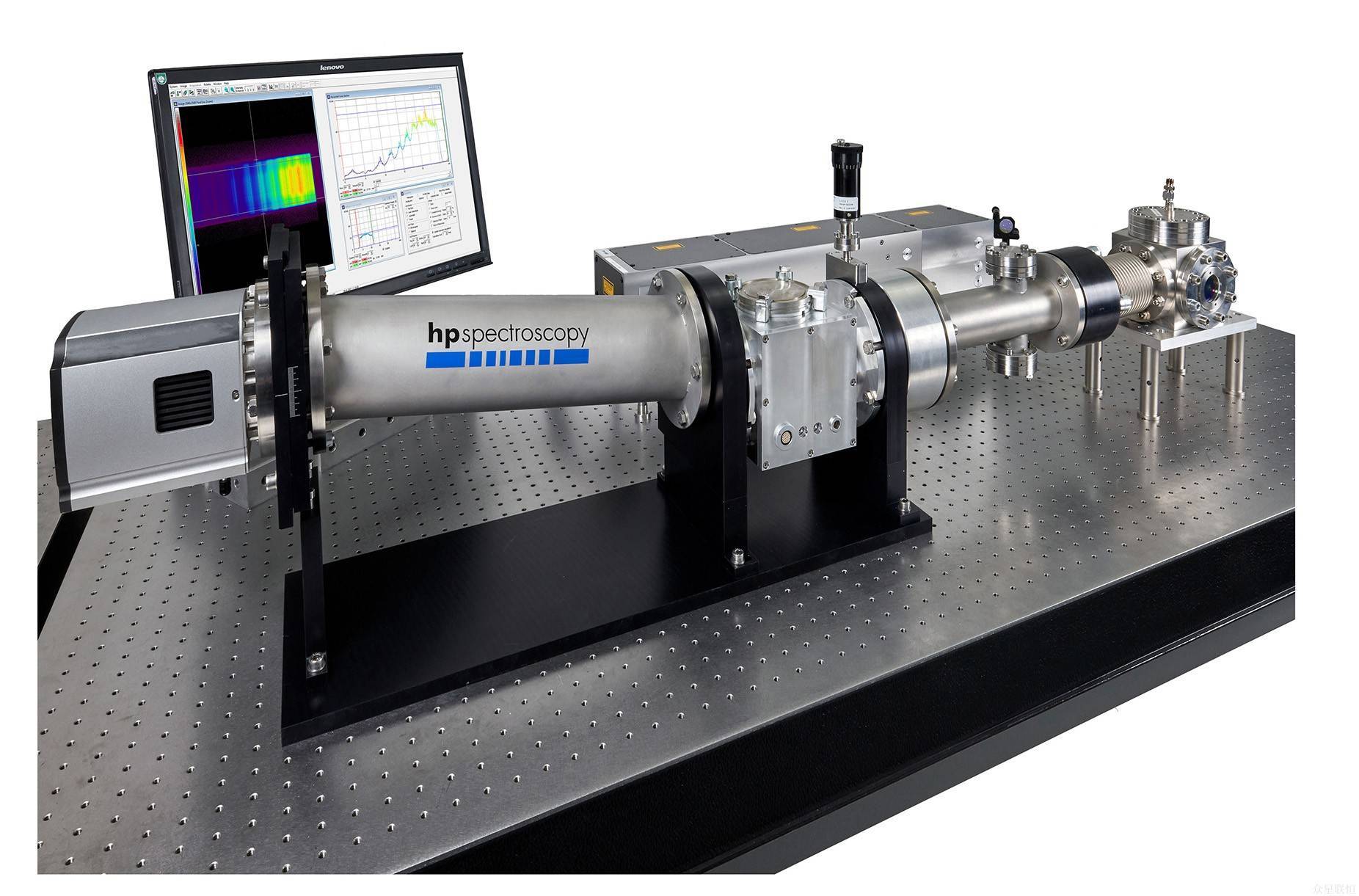
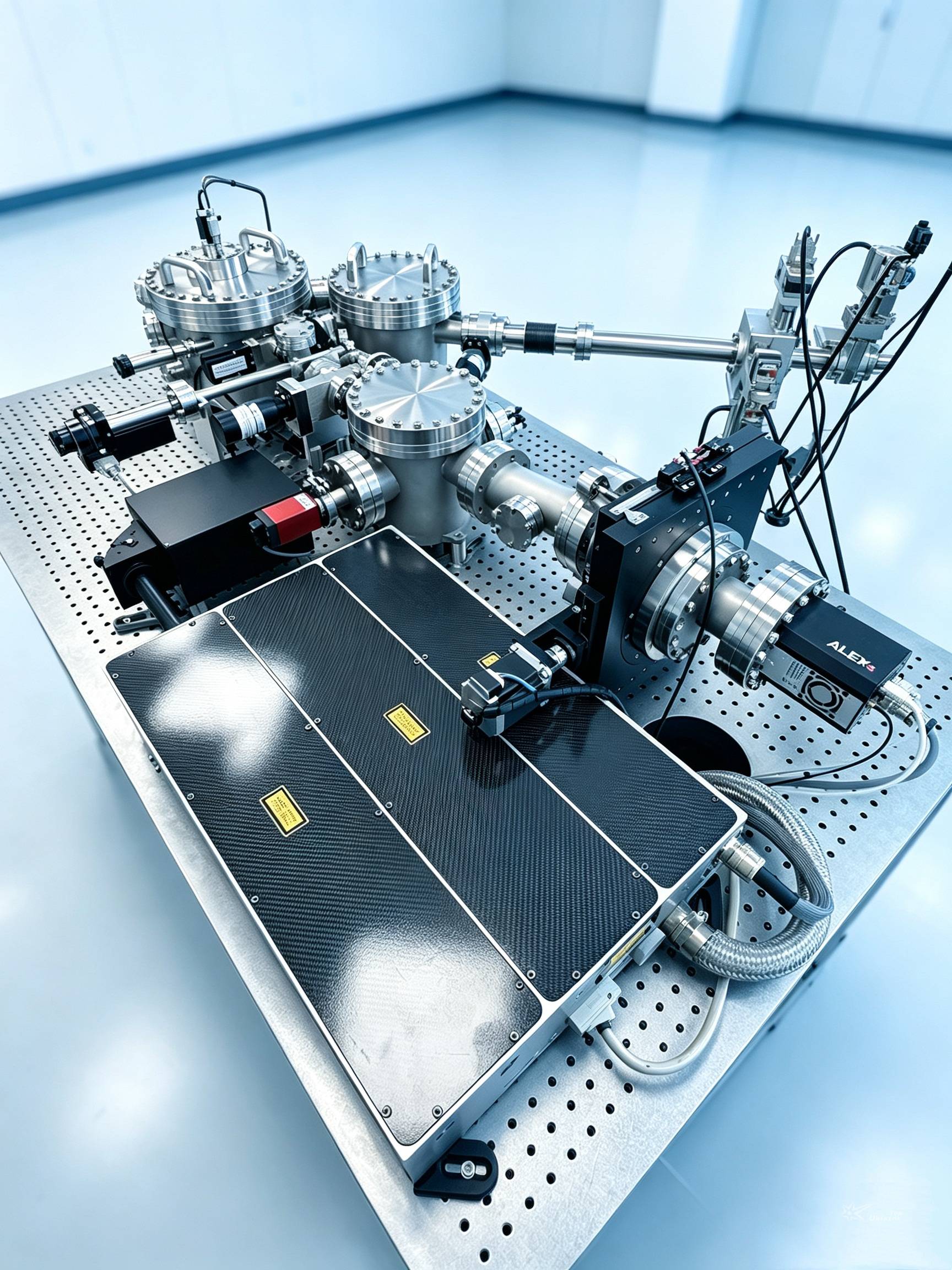
Direct-read benchtop soft X-ray near-edge X-ray absorption fine structure spectrometer 200-1200 eV / tabletop XAFS
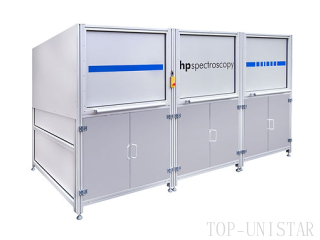
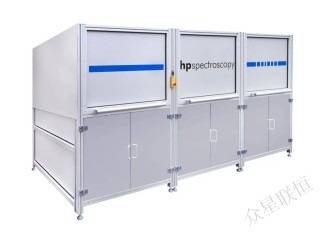
Combining a highly reliable laser-driven plasma XUV light source with a custom spectrometer featuring an extremely high resolving power of 1500, proXAS is a laboratory-scale system for NEXAFS measurements. The 200-1200 eV energy range allows analysis of absorption edges of elements such as C, N, O, Ca, and Ti.
Model: proXAS
Brand: HP Spectroscopy

Introduction
The first integrated benchtop NEXAFS system
No longer need to apply for and wait for synchrotron radiation beamtime
Chemical state analysis for geological, biological, and materials research
Synchrotron-quality spectral performance
proXAS is a laboratory-scale system for NEXAFS measurements. Researchers can now obtain fast, accurate elemental fingerprint analysis in their own laboratories. It combines a highly reliable laser-driven plasma XUV light source with a custom spectrometer offering an extremely high resolving power of 1500. The 200-1200 eV energy range allows analysis of edges of elements such as C, N, O, Ca, and Ti.
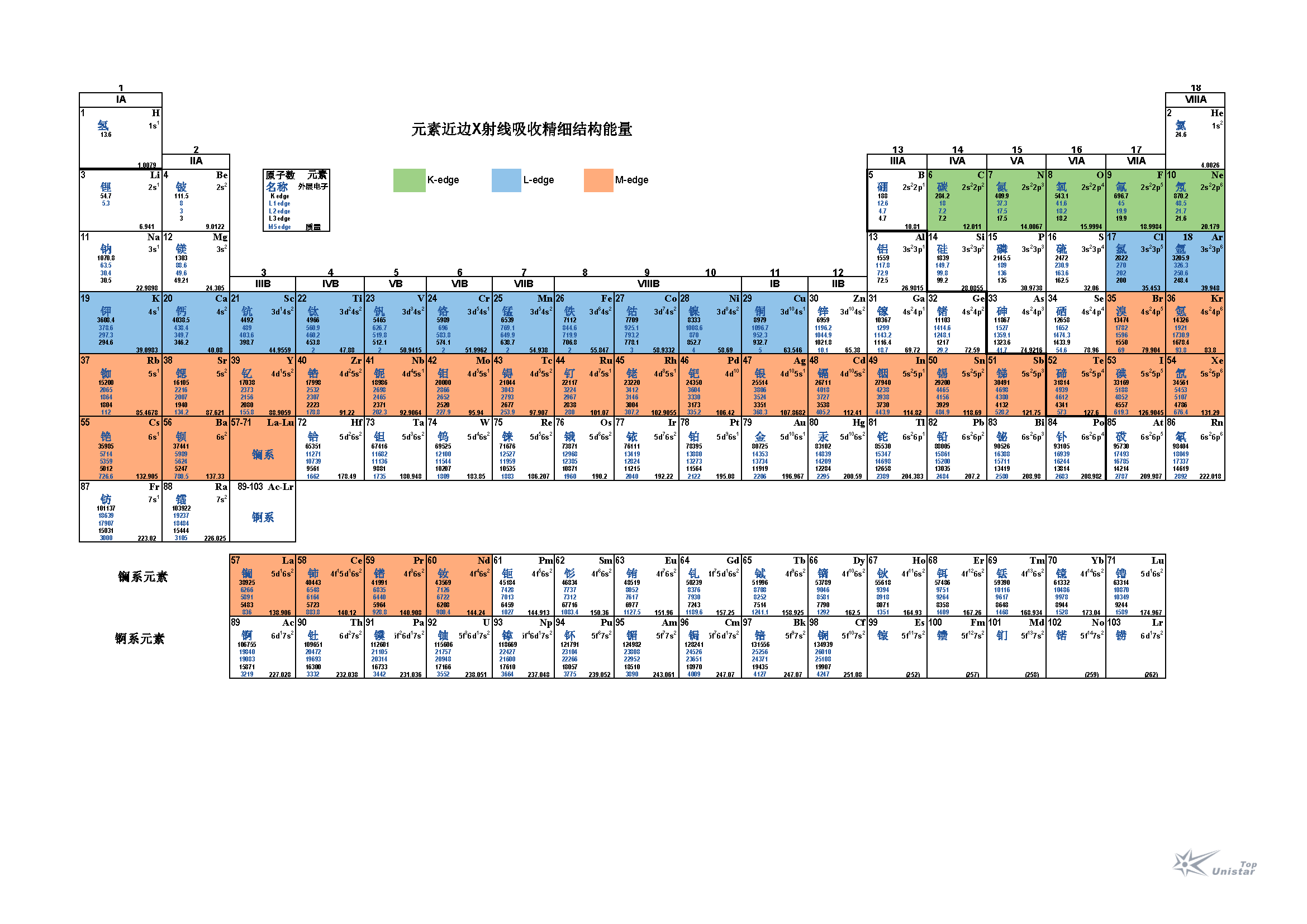
Elemental range measurable by proXAS
Typical Applications
Surface Science
Chemical State Analysis in Geochemistry
Electronic Structure and Oxidation State Analysis
Specifications
Measurement results
The left figure shows the carbon K-edge NEXAFS spectrum of a 200 nm polyimide film measured with a tabletop system (average of 60 pulse shots). The right figure compares the tabletop system results with synchrotron radiation results. (data courtesy of Dr. K. Mann, IFNANO) | |
(a) C K-edge, (b) Ca L-edge, and (c) O K-edge absorption spectra of several organic compounds measured by proXAS | |
O K-edge NEXAFS measurement results of four iron-containing minerals (goethite, hematite, ferrihydrite, and Cca-2 chlorite) by proXAS (left) compared with similar synchrotron radiation results (right) | |
C K-edge NEXAFS measurement results of PMDA-ODA polyimide by proXAS (left) compared with similar synchrotron radiation results (right) | |
O K-edge NEXAFS measurement results of CeO2 by proXAS (left), including synchrotron radiation measurement results of similar samples (right) |


General Parameters
Applications
Literature
10 references found
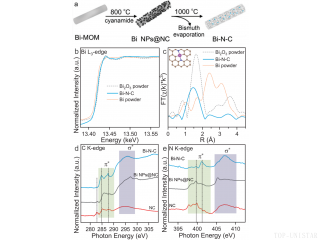
Conventional non-precious-metal hydrogen evolution reaction catalysts suffer from excessive hydrogen adsorption and instability. To overcome this issue, we pioneered a high-entropy single-atom (HESA) catalyst by precisely anchoring multiple transition metals onto a carbon support. This HESA catalyst achieved record-breaking HER performance under alkaline conditions, with an overpotential of 44 mV@10 mA cm⁻² (comparable to commercial Pt/C catalysts) and stability exceeding 300 hours, resolving the long-standing activity-stability trade-off. Systematic characterization revealed that low-coordination metal sites induce significant metal-support charge redistribution. The electronegative support withdraws electrons from the metal centers, while π back-donation shifts the metal d-band center downward, optimizing the Gibbs free energy of the intermediate hydrogen atom (ΔG_H*). Atomic-scale imaging further confirmed uniform charge distribution and angstrom-level electric field response. Critically, adjacent multi-metal sites synergistically lower the energy barriers for water dissociation and hydrogen desorption through a cooperative electron-buffering effect. This work establishes entropy-driven microenvironment engineering as a paradigm for the synergistic optimization of active sites and electronic structures, paving the way for durable non-precious-metal catalysts.
In this work, we demonstrate the integration of a flat liquid jet sample delivery system into a compact soft X-ray absorption spectrometer using a tabletop laser-induced plasma light source. A high-speed flat liquid sheet is formed by the collision of two cylindrical jets. This micrometer-thick sheet is ideally suited for transmission-mode soft X-ray absorption spectroscopy utilizing krypton plasma emission. By applying the Lambert-Beer law, the thickness distribution of the jet was analyzed in detail. Measurements on water, focusing on the oxygen K-edge, revealed a sheet thickness distribution ranging from 500 nm to 1 micrometer over a length of 3.8 mm. Furthermore, we investigated aqueous solutions of iron salts, capturing near-edge X-ray absorption fine structure spectra over a broad spectral range from the nitrogen K-edge to the iron L-edge. Focused analysis of iron species in aqueous solution enabled us to quantitatively distinguish the oxidation states of Fe2+ and Fe3+ at the iron L-edge. Our results were compared with measurements obtained under similar conditions at a synchrotron.
Although two-dimensional (2D) conductive metal-organic frameworks (cMOFs) are attractive for energy applications due to their intrinsic electrical conductivity and redox activity, alleviating the restricted mass transport within long-range microporous channels remains a significant challenge. Herein, we propose a tandem assembly and etching chemistry approach to introduce vertically aligned mesopores into the micropores of cMOFs via a bifunctional modulator. Synchrotron radiation spectroscopy and morphological analysis revealed that the finely tuned ammonia modulator first coordinates with Zn2+ during the initial self-assembly of cMOF oligomers to form defects, subsequently triggering the formation of mesoporous cMOFs through in-situ etching. In-situ spectroscopy and theoretical simulations further revealed that this unique vertically aligned mesoporous structure shortens the microporous channels by two orders of magnitude and alleviates the inherent ion accumulation within the micropores, resulting in a fivefold increase in Na+ transport speed, remarkable rate performance at 250 C, and sodium storage lifetime exceeding 50,000 cycles. Our approach opens new avenues for introducing mesopores into microporous cMOFs, applicable to advanced energy applications and beyond.
Company Introduction
Founded in 2012, HP Spectroscopy GmbH of Germany is dedicated to customizing optimal solutions for customers in global research and industrial fields, serving as a global supplier and leading developer of scientific instruments. Its product line includes XAS systems, XUV/VUV/X-ray spectrometers, and beamline products. The core team is composed of experts in X-ray, spectroscopy, grating design, plasma physics, and beamline fields. The company maintains close collaboration with scientists at world-leading research institutions, stays abreast of cutting-edge technologies, and sustains product iteration and innovation.