

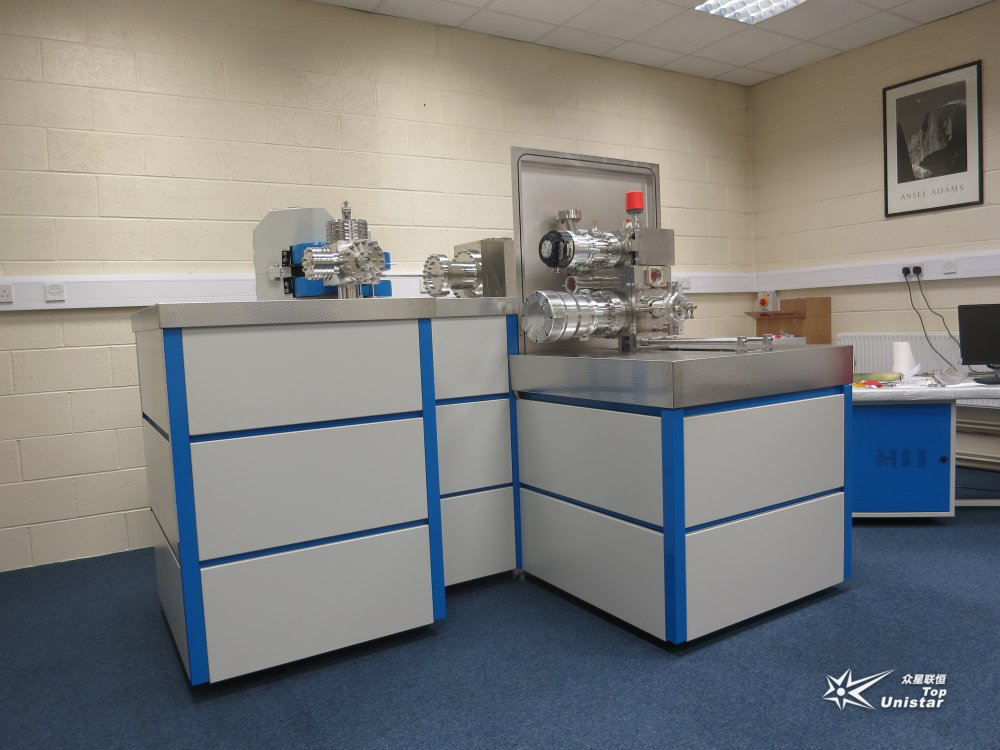
Knudsen Effusion Mass Spectrometry (KEMS)
Provides quantitative, kinetic, and thermodynamic information about isotopes and compounds contained in analytes by evaluating gas effusion.
Model: KEMS
Brand: MSI

Introduction
Knudsen effusion mass spectrometry (KEMS) is a proven Knudsen effusion mass spectrometry technique. By using a Knudsen cell, KEMS provides quantitative, kinetic, and thermodynamic information about isotopes and compounds contained in the analyte by evaluating gas emissions. MSI's KEMS instruments are built on the well-established AutoConcept platform.
Advantages of the AutoConcept platform:
Ø Fully bakeable ion optics
Ø Fully laminated magnet for rapid scanning
Ø Magnetic field scan range starting from 1 amu
Ø Minimal lens stack with automatic tuning to ensure sensitivity and resolution
ØStable platform with modular ion optical system to simplify installation in a glovebox
ØResolution up to 80,000, providing higher efficiency for routine applications
ØDual filaments for the EI source with trap and/or emission control
ØHeated and cooled ion source
ØClamp-type ion source for easy removal and maintenance, which can be detached easily via a locking system
ØMulti-pump vacuum system to reduce vacuum loss in the analyzer region and keep it clean and free of contamination
Specifications
Main functions of MSI's KEMS:
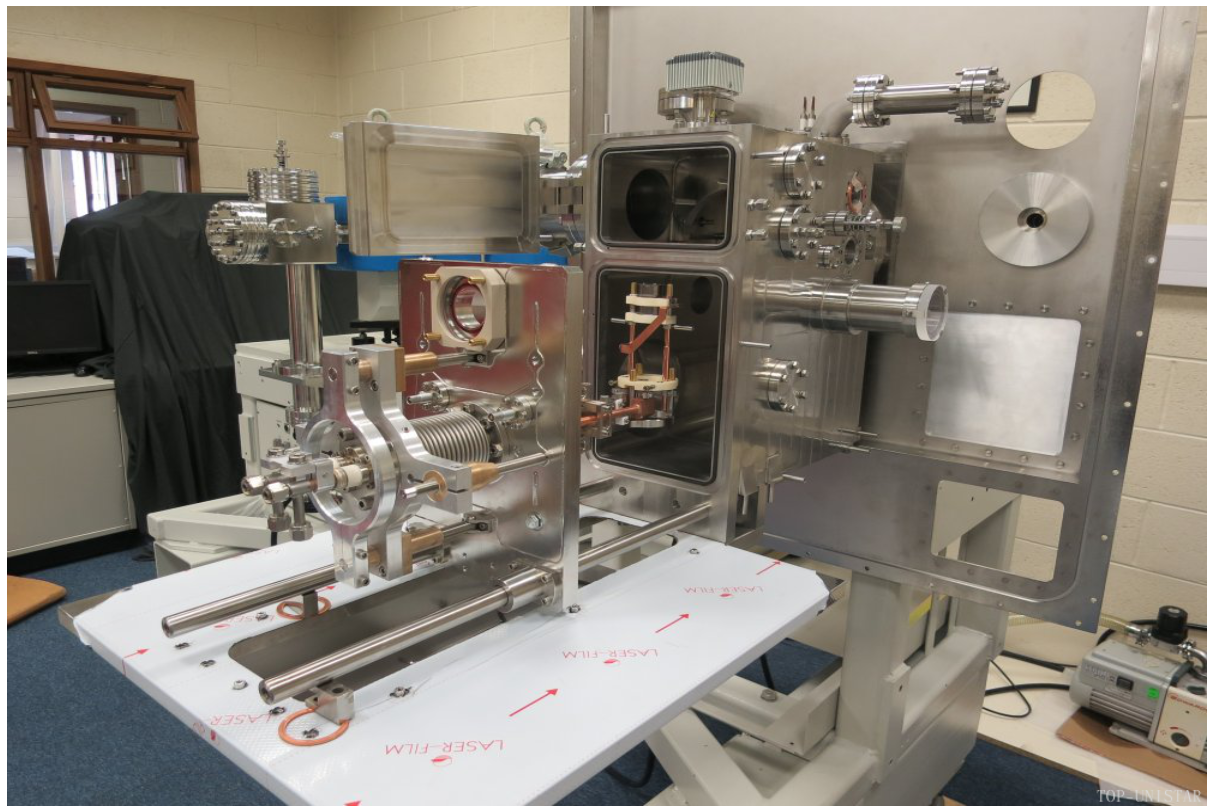
Ø Larger cavity for easy assembly
Ø X, Y, and Z lenses for alignment and maintaining minimum distance between the aperture and the EI cavity
Ø Dual filament system
Ø Laser/camera alignment
Ø Dynamic vacuum control system
Ø Easy sample exchange
Ø Accurate temperature measurement
Ø Temperature control system
Ø Complete system testing
KEMS can be customized according to customer requirements:
Ø A custom-designed glovebox can be added (as shown in the figure)
Ø The furnace can be heated by laser or resistance coil
Typical Applications
KEMS Applications
KEMS instruments can provide quantitative, kinetic, and thermodynamic information about isotopes and compounds contained in analytes by evaluating gas emissions. Such information is invaluable for any material required to operate at high temperatures and pressures.
KEMS is commonly used for research on the following materials:
| Metal oxides High-temperature ceramics Nuclear fuels Superconductors Glass Corrosion layers High-temperature alloys | Vapor-deposited coatings Fuel cells Geochemical materials Hydrocarbons Aerosols Cement Batteries |
KEMS as a Research Tool
KEMS is well known as a powerful technique for studying thermodynamics and high-temperature vapors, but it has also proven beneficial in other research areas. Some fields currently using KEMS for research include:
| Gas-phase reactions of high-temperature vapors Liquidus lines Evaporation coefficient | Kinetic plasma diagnostics of processes involving vapor species, high-temperature clusters, and abnormal bond types |
Company introduction:
Mass Spectrometry Instruments Ltd (MSI) is a highly specialized company dedicated to the design of high-performance magnetic sector double-focusing mass spectrometers to meet the needs of the organic and inorganic analysis markets. It inherits the technology of Kratos Analytical, a pioneer in the introduction of commercial mass spectrometers in 1957. Since then, the demand for high-precision, high-resolution instruments has grown exponentially. At MSI, we are making great strides in taking this technology to new levels by investing in new developments and applications.
Literature
1 references found