

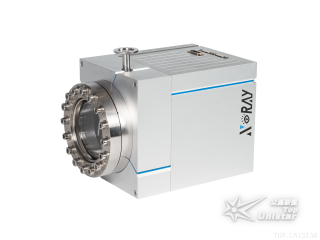
SpotCam-E Back-Illuminated sCMOS Camera
The SpotCam-E integrates a domestic sCMOS chip with self-developed readout electronics and single-photon spectroscopy algorithms through high-reliability packaging and embedding, based on a deep understanding of readout electronics and single-photon spectroscopy applications. It enables high-frame-rate, high-sensitivity detection in the extreme ultraviolet (EUV) to low-energy X-ray range.
Model: SpotCam-E
Brand: 艾格斯瑞

Introduction
The SpotCam-E is built on a deep understanding of readout electronics and single-photon spectroscopy applications. It integrates a domestic sCMOS chip with self-developed readout circuitry and single-photon spectroscopy algorithms in a highly reliable, embedded package, enabling high-frame-rate, high-sensitivity detection in the extreme ultraviolet to low-energy X-ray range. In addition, the unique pluggable sensor design effectively extends the camera's service life and reduces maintenance/repair costs. Standard external-vacuum and fully in-vacuum cameras are available, and customization can be provided for specific requirements.
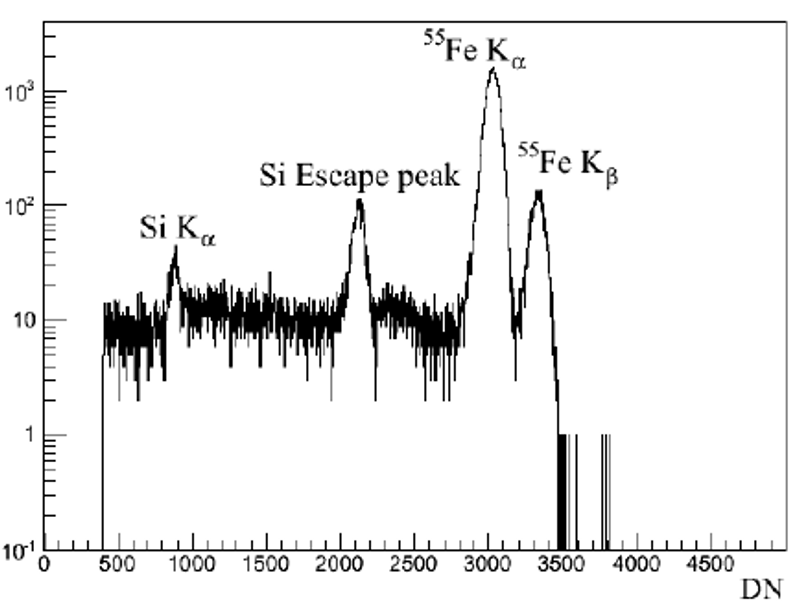 | 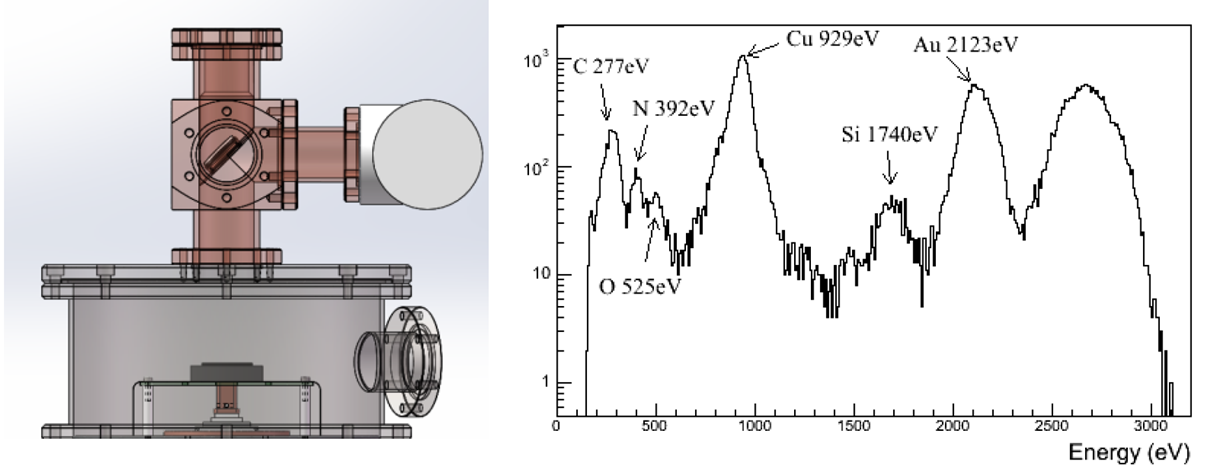 | |
| Energy spectrum of 55Fe at room temperature (20°C) (FWHM<200eV@5894eV) | Low-energy XRF spectrum of a carbon target excited by an X-ray tube |
Features & Advantages
Application Scenarios
• Visible light, far ultraviolet, and X-ray imaging
• X-ray single-photon measurement and energy spectrum measurement
• Detection of charged particles such as electrons and protons
Company Introduction
Aigse Ray (Chengdu) Instrument Equipment Co., Ltd. was established in 2020. Based on a simulation system, Aigse Ray focuses on the research, design, and manufacture of core X-ray components and parts, and is committed to providing efficient, reliable, and advanced complete solutions for industrial and scientific research customers.
Main products include microfocus X-ray light sources, core X-ray components, X-ray detectors, and X-ray simulation software, widely applied in various material analysis, characterization, and fundamental research scenarios, such as characterization of new energy materials and devices, semiconductor process inspection, reverse engineering of materials and chip devices, frontier material research and development, and plasma diagnostics.