

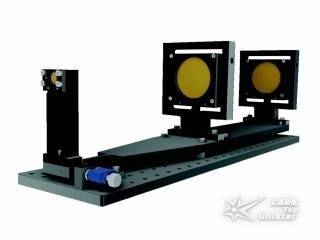
X-ray Phase Contrast and Dark-field Imaging Kit
Talint EDU: Modular, cost-effective X-ray phase contrast and dark-field imaging kit. Compared with traditional X-ray absorption imaging, X-ray phase contrast imaging provides higher contrast for light-element samples, making it particularly suitable for imaging samples composed of soft tissue and light elements. Among the five main phase contrast imaging methods currently available, most have extremely high requirements for source coherence and can only be realized with synchrotron radiation sources or microfocus X-ray sources. Grating-based phase contrast imaging, after more than a decade of development, has become the mainstream technical approach for implementing phase contrast imaging experiments in the laboratory.
Model: Talint EDU
Brand: Microworks

Introduction
Talint EDU: Modular, cost-effective X-ray phase contrast and dark-field imaging kit
Compared with traditional X-ray absorption imaging, X-ray phase contrast imaging provides higher contrast for light-element samples, making it particularly suitable for imaging samples composed of soft tissue and light elements. Among the five main phase contrast imaging methods currently available, most have extremely high requirements for source coherence and can only be realized with synchrotron radiation sources or microfocus X-ray sources. Grating-based phase contrast imaging, after more than a decade of development, has become the mainstream technical approach for implementing phase contrast imaging experiments in the laboratory. However, the fabrication of high-aspect-ratio and large-field-of-view gratings has always been a pain point for researchers. The emergence and maturity of LIGA technology has made the fabrication of such gratings easier and more reliable.
Gratings for X-ray phase contrast imaging utilize the Talbot self-imaging effect to obtain information about the tiny angular deflections of X-rays caused by refraction and scattering. This has potential applications in various fields, from medical imaging to materials research. However, for researchers just entering this field or users who simply want to quickly obtain phase contrast images, the tedious simulation of grating parameters, the high cost of custom grating fabrication, and the selection and precise adjustment of precision translation stages all consume considerable effort.To solve this problem, the German company Microworks has launched a modular, cost-effective X-ray phase contrast and dark-field imaging kit—TALINT EDU
The TALINT EDU system from Microworks is a compact, affordable TALbot interferometer kit. It is an ingenious simplified form of the X-ray Talbot-Lau interferometer, including all necessary hardware to set up and fine-tune the interferometer, as well as to obtain three imaging modes through phase-stepping procedures: absorption imaging, phase contrast imaging, and dark-field imaging.
In less than half an hour, it can be installed as easily as another detector. For this simplified system, image acquisition is manual, and the images obtained during the phase-stepping process are well suited for image analysis scientists.
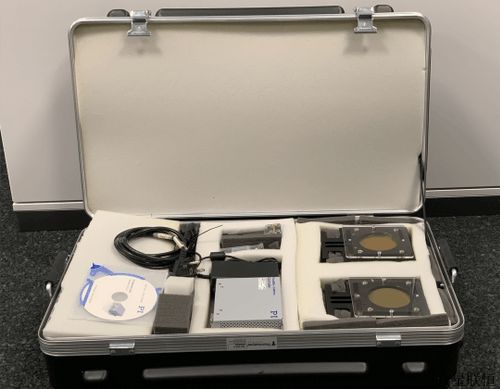
Features & Advantages
Specifications
Talint-EDU Features
Grating Set Features
| Standard Specifications | Design energy - 40 keV | Design energy - 21 keV |
|---|---|---|
| Grating period (3 bent gratings, G0, G1, G2) | 6.00 μm | 4.80 μm |
| G0 G2 absorption material and height | Gold >150 μm | Gold >50 μm |
| G0 G2 grating duty cycle | 0.55 (tolerance range 0.5-0.6) | 0.55 (tolerance range 0.5-0.6) |
| G0 G2 grating substrate | Graphite 400 μm | Graphite 400 μm |
| G1 phase-shift material and height | Gold 7.7 μm (40 keV) | Nickel 7.4 μm (21 keV) |
| G1 grating duty cycle | 0.5 (tolerance range 0.45-0.55) | 0.5 (tolerance range 0.45-0.55) |
| G1 grating substrate | Silicon 200 μm | Silicon 200 μm |
| Field of view (sample) | 35 mm | 35 mm |
| TALINT-EDU is a one-dimensional grating symmetric structure. In addition to the above standard grating sets, custom gratings with other energy ranges, fields of view, etc. can be provided upon request. | ||
Literature
3 references found
Recent advances in X-ray imaging of breast tissue: From two- to three-dimensional imaging
Research paperX-ray phase imaging reaching clinical uses
Research paperPrinciples of Different X-ray Phase-Contrast Imaging: A Review
Research paperAbout Top Unistar and XRnanotech
XRnanotechis a high-tech company originating from more than a decade of cutting-edge research and development at the Paul Scherrer Institut in Switzerland, officially established in 2020, dedicated to bringing breakthrough innovations in nano-optics to industrial applications. The German company Microworks, a subsidiary of XRnanotech, specializes in the fabrication of high-aspect-ratio micro- and nano-structures using LIGA technology.
The company's vision is to empower optical instruments worldwide to reach their full performance potential and push beyond existing technological boundaries; its mission focuses on developing and manufacturing the highest level of nano-optical components, achieving ultimate optimization in key metrics such as resolution, efficiency, stability, and structural design.
Its product line includes: extreme ultraviolet, X-ray Fresnel zone plates, X-ray phase contrast gratings, diamond optical components, X-ray micro/nano resolution test targets, superlenses, and neutron gratings, with applications covering X-ray scientific research, materials analysis, medical imaging, and other cutting-edge fields. Leveraging its unique Ir-line multiplication technology, XRnanotech can fabricate Fresnel zone plates with resolutions as low as <10 nm, and offers various materials such as gold, nickel, silicon (silicon dioxide), iridium, chromium, and even diamond.
Top Unistarserves as the exclusive agent for XRnanotechin China, providing all pre-sales consultation, sales, and after-sales services to Chinese users. Additionally, as a leading service and solution provider in the EUV-X-ray field, Top Unistar has built up a certain inventory of EUV and X-ray related equipment and core components, enabling rapid delivery to better serve our customers. We have also established a well-equipped X-ray open laboratory, equipped with multiple advanced X-ray source systems, optical components, and detectors, supporting diverse testing, pre-research, and validation work including X-ray imaging, phase contrast imaging, diffraction analysis, fluorescence detection, and X-ray source performance characterization.
We are a team passionate about extreme ultraviolet and X-ray technology. If you have any questions you would like to discuss with us, please do not hesitate to contact us directly.