

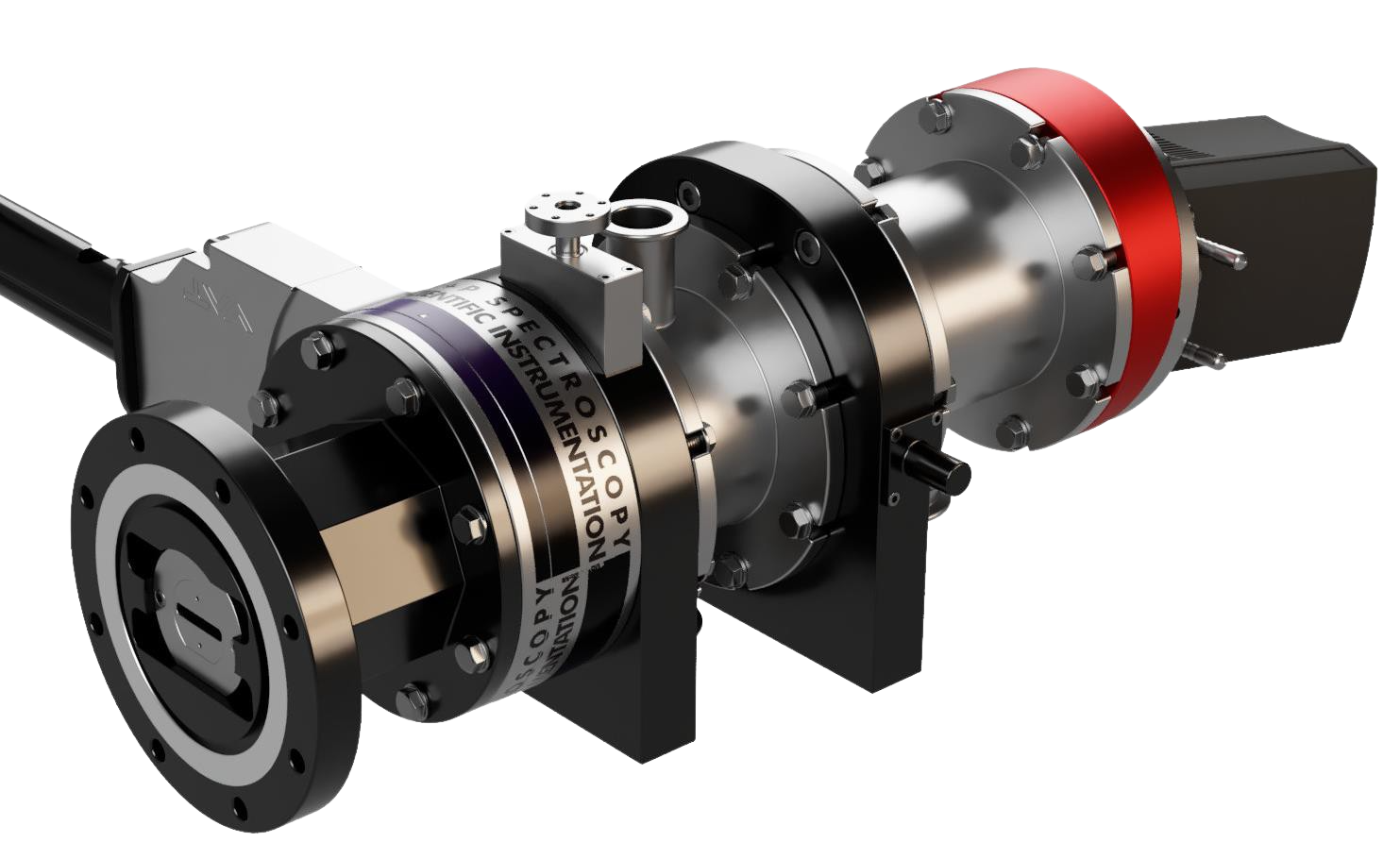
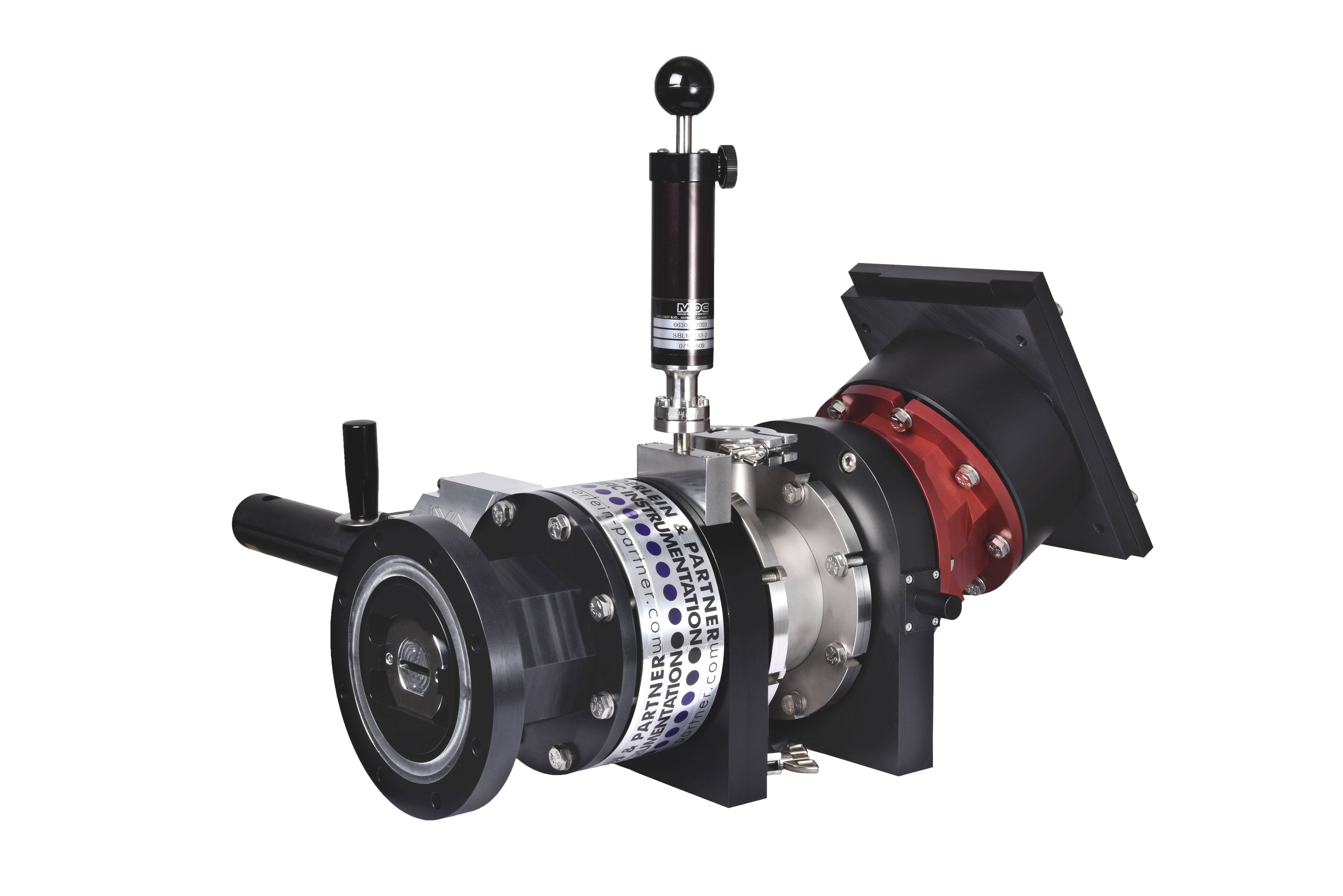
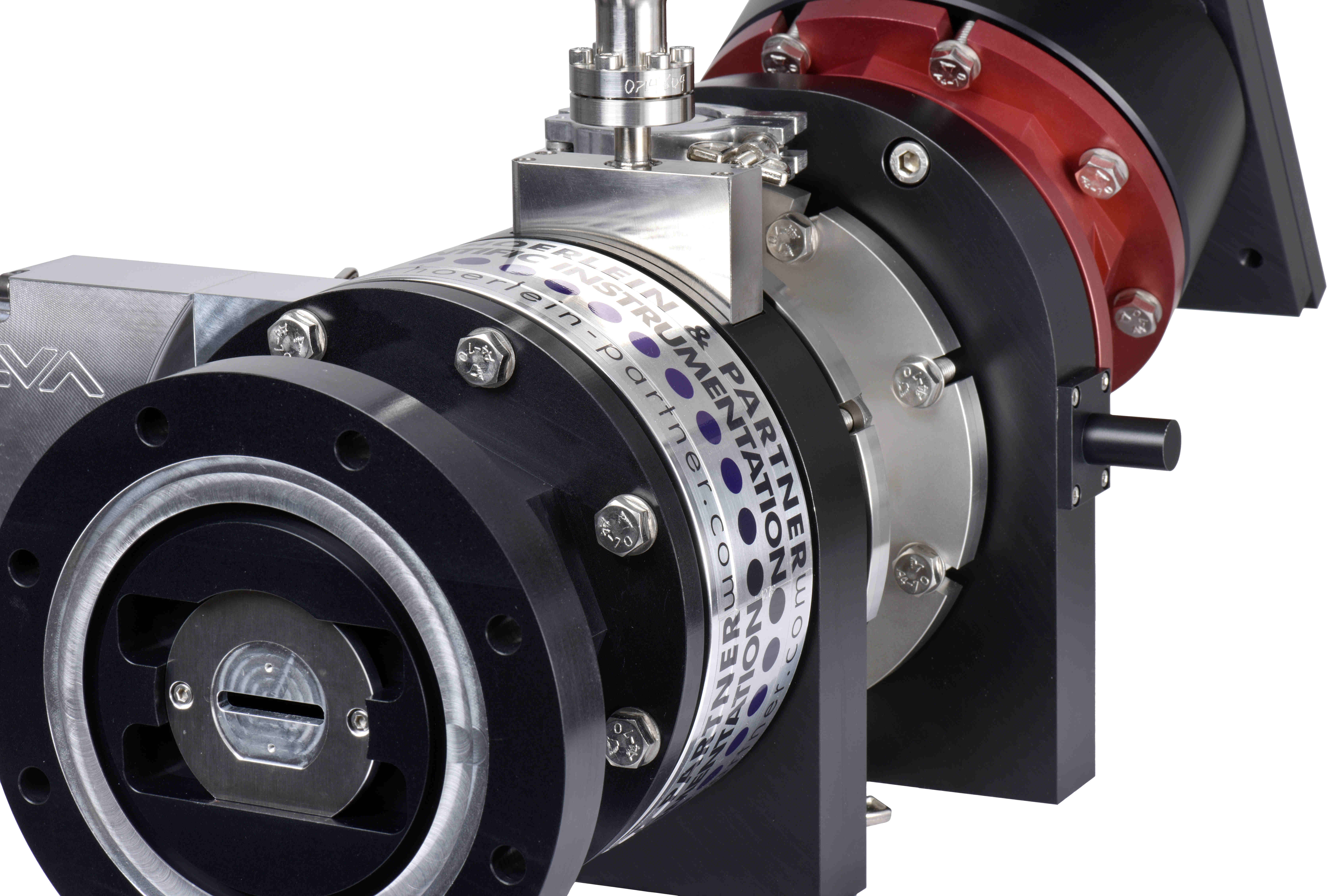
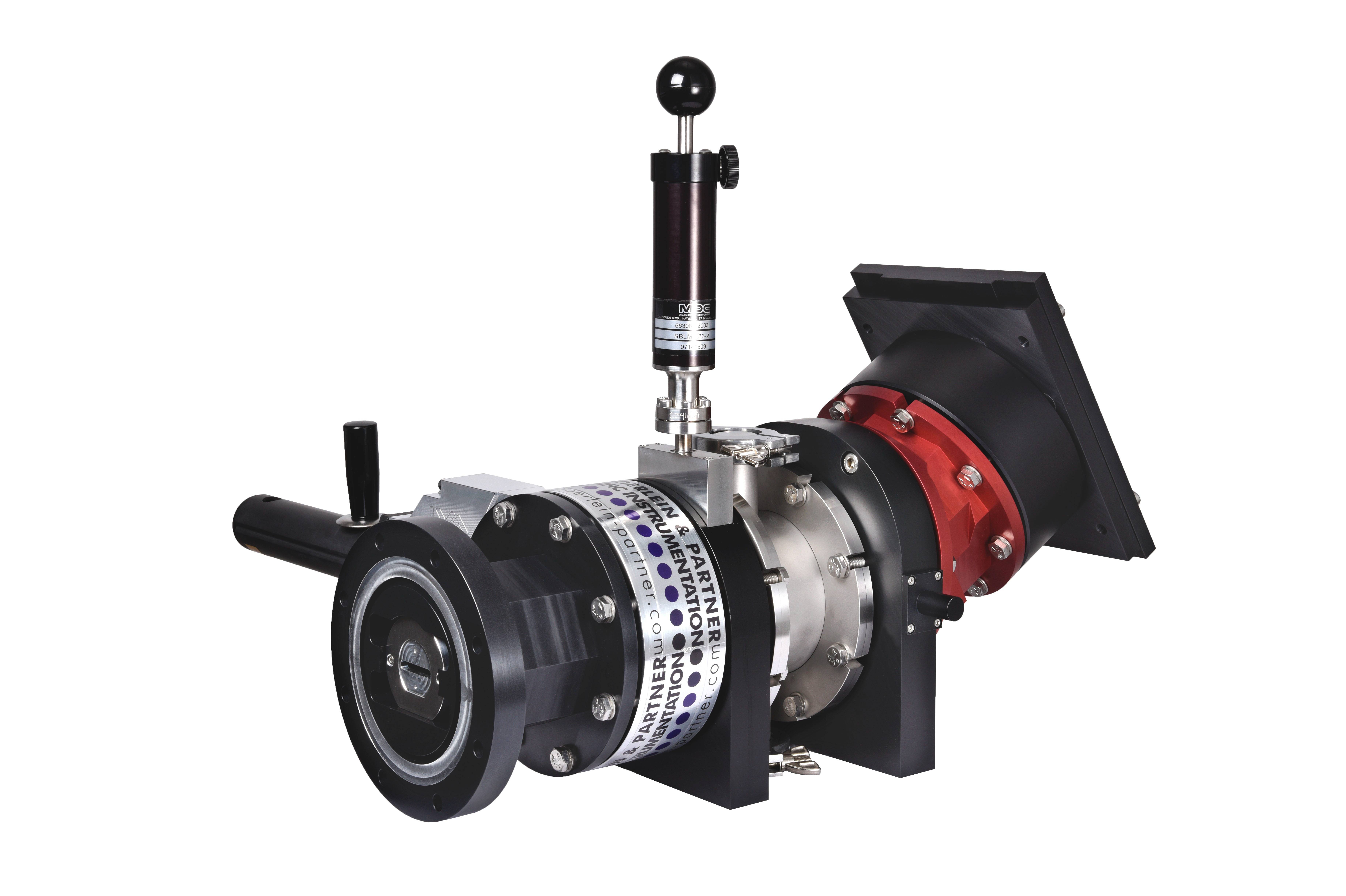
maxLIGHT slitless flat-field XUV spectrometer and beam analyzer
Optimized for the extreme ultraviolet (EUV) 13.5 nm band
Model: maxLIGHT
Brand: HP Spectroscopy

Introduction
- Spectrograph and monochromator functions
- Gratings with optimal efficiency
- Wavelength range from 1 to 200 nm
- High-precision wavelength setting
- Compact, modular design
Thanks to its seamless design, the maxLIGHT pro offers the largest light collection and highest efficiency in its class of spectrometers. The aberration-corrected flat-field wavelength range covers a broad spectral bandwidth from 1 nm to 200 nm; for example, a single grating can cover 5-80 nm.
Its modular design can match different experimental configurations. It features an integrated slit holder and filter insertion unit, as well as motorized grating positioning.
Flexible and comprehensive detector configuration options
nXUV CCD — for high-resolution, high-dynamic-range applications
MCP/CMOS — for wide spectral range, gated, or image-intensified detection requirements, customizable according to user needs
Slitless design
HPS's proprietary spectrometer design uses direct source imaging technology. Therefore, no narrow entrance slit is required, and the collection of incident light is maximized. Compared with traditional spectrometer architectures, the light intensity reaching the detector is more than 20 times higher. This structure also greatly improves the stability of daily operation.
 |  |
Measurement results
 | Characterization of HHG via maxLIGHT XUV (left) in coincidence spectroscopy applications using attosecond XUV pulses. High-order harmonics originate from single-photon transitions (blue arrows), while two-photon transitions of XUV and IR light appear as sidebands in the photoelectron spectrum (right). J. Vos et al, Orientation-dependent stereo Wigner time delayand electron localization in a small molecule Science 360 1326-1330 (2018) |
 | HHG spectrum measured with maxLIGHT XUV (right) and spectrum of a 25 fs fundamental pulse broadened in a kagomé photonic crystal fiber (left). The effect of soliton blue-shift on HHG with increasing pump energy is clearly visible. F. Tani et al, Continuously wavelength-tunable high harmonic generation via soliton dynamics Opt. Lett. 42 1768-1771 (2017) |
 | At the same signal intensity, the maxLIGHT pro spectrometer (solid line) provides significantly higher resolution than a standard spectrometer (dashed line). To achieve equivalent spectral resolution, conventional spectrometer technology requires narrow slits, which significantly reduces signal intensity. C. Hauri et al, High-Harmonic Radiation for seeding theSwiss Free Electron Laser Andor Learning (2016) |
 | HHG spectrum in the cutoff region at 150 kHz repetition rate obtained with maxLIGHT XUV. Changes in CEP reveal that intensity modulation begins to disappear at certain CEP settings, indicating the presence of isolated attosecond pulses. M. Krebs et al, Towards isolated attosecond pulses atmegahertz repetition rates Nature Photonics 7 555–559 (2013) |
 | Reference spectrum example demonstrating the resolving power of the maxLIGHT spectrometer. Shown is the high-order harmonic spectrum after interaction of femtosecond laser pulses with a solid target, filtered by a filter. The fine structure inherent to the harmonic generation process can be clearly resolved by the maxLIGHT spectrometer. Top: raw image recorded by an X-ray CCD camera. Bottom: harmonic spectrum obtained by column binning. L. Waldecker et al, Focusing of high order harmonics from solid density plasmas Plasma Phys. Control. Fusion 53 124021 (2011) |
Specifications
| Topology type | Aberration-corrected flat-field spectrometer and beam analyzer | ||
| Wavelength range | 1-200nm | ||
| Source distance | Flexibly adjustable according to the user's actual optical path | ||
| Detector type | CCD or MCP/CMOS | ||
| Vacuum compatibility | <10-6 mbar (UHV ultra-high vacuum version available on request) | ||
| Slitless technology | Included | ||
| Entrance slit | Adjustable | ||
| Grating positioning | Closed-loop motorized stage | ||
| Filter insertion mechanism | Includes | ||
| Control interface | USB or Ethernet | ||
| Software | Windows UI and Labview/VB/C/C++ SDK | ||
| Customization | Customizable upon request | ||
| Options | Non-magnetic, rotating geometry, polarimetry, etc. | ||
| SXR | XUV | VUV | |
| Wavelength range | 1-20nm | 5-80nm | 40-200nm |
| Dispersion capability | 0.2-0.4nm/mm | 0.5-1.3nm/mm | 0.9-1.6nm/mm |
| Resolution | <0.015nm at 10nm | <0.028nm at 40nm | <0.05nm at 120nm |
Typical applications
High harmonic generation source
Attosecond science
Strong interaction between laser and matter
Free-electron laser
Plasma sources generated by laser and discharge
X-ray laser
Laser-driven secondary source
Company introduction
Founded in 2012, HP Spectroscopy GmbH of Germany is committed to providing customized optimal solutions for customers in global research and industrial fields, and is a global supplier and leading developer of scientific instruments. Its product line includes XAS systems, XUV/VUV/X-ray spectrometers, beamline products, and more. The core team is composed of experts in X-ray, spectroscopy, grating design, plasma physics, beamline, and other fields. It maintains close cooperation with scientists at world-leading research institutions, keeps abreast of cutting-edge technologies, and sustains product iteration and innovation.